
Case Study: Data Transformation & Engineering at Xclusive Cuttings
Client Profile
Organization: Xclusive Cuttings Uganda
Industry: Agriculture/Floriculture
Size: Over 500 employees
Location: Uganda & Netherlands
Overview
Xclusive Cuttings Uganda, a premier exporter of flower cuttings to European and Asian markets, faced significant challenges with their manual data collection and management processes. These inefficiencies were impacting their ability to make timely, data-driven decisions crucial for maintaining their competitive edge in the international market.
Our team has delivered a comprehensive digital transformation solution that revolutionized their data collection, processing, and analysis capabilities. This case study details how we replaced error-prone manual workflows with a robust, secure, and automated system that delivers actionable insights to stakeholders in real-time.
Challenge
Xclusive Cuttings Uganda was experiencing several critical pain points:
- Manual Data Collection: Field workers were recording production and quality data on paper forms that were later transferred to Excel spreadsheets, leading to delays and transcription errors.
- Data Accessibility: Limited connectivity in growing areas prevented real-time data collection and reporting. - Data Quality: Inconsistent data entry standards resulted in unreliable analytics.
- Reporting Delays: Manual data aggregation meant stakeholders couldn't access timely insights.
- Security Concerns: Sensitive production data was vulnerable in spreadsheet-based systems with minimal access controls.
These challenges were particularly problematic for a company competing in the time-sensitive international flower market, where production planning and quality control require precise, up-to-date information.
Solution
We designed and implemented a comprehensive data management ecosystem:
Mobile Data Collection Platform
We developed a React Native mobile application that revolutionized the field data collection process:
- Offline-First Architecture: Field workers can collect data regardless of connectivity.
- Intuitive User Interface: Minimal training required for field staff adoption.
- Automated Synchronization: Data automatically uploads to central servers when connectivity is restored.
- Multi-language Support: Interface available in English and local languages to improve usability.
Secure Data Infrastructure
The solution implemented a modern data architecture with multiple layers of security:
- End-to-End Encryption: All data encrypted during transmission and at rest.
- Role-Based Access Control: Granular permissions ensure users only access appropriate data.
- PostgreSQL Database: Robust, enterprise-grade database for primary data storage.
- API Gateway: Secure RESTful services for data exchange between system components.
- Authentication System: Multi-factor authentication for sensitive operations.
Data Processing Pipeline
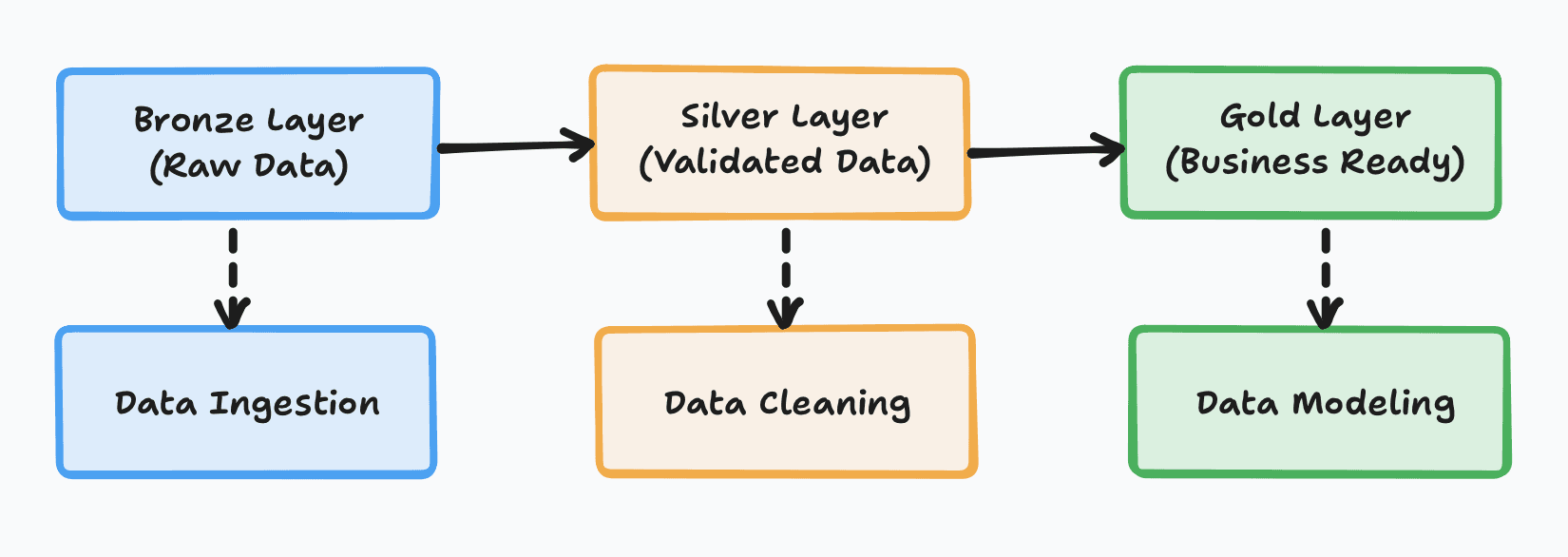
We implemented a lakehouse architecture with medallion pattern for scalable, reliable data processing:
- Bronze Layer: Raw data ingestion from mobile applications and other sources.
- Silver Layer: Validated and cleansed data with business rules applied.
- Gold Layer: Aggregated, transformed data optimized for analytics.
- Automated Data Pipeline: ETL processes running on scheduled triggers.
- Data Quality Monitoring: Automated checks to ensure data integrity.
Business Intelligence Integration
The processed data feeds into a Microsoft Power BI environment:
- Custom Dashboards: Role-specific visualizations for different stakeholders.
- Real-Time Analytics: Near real-time updates for critical production metrics.
- Automated Reporting: Scheduled report generation and distribution.
- Export Capabilities: Data export options for additional analysis.
- Mobile Access: Insights available on mobile devices for management on the go.
Technical Implementation Details
Technology Stack
- Frontend: React Native for cross-platform mobile application
- Backend: Node.js with Express for API services
- Database: PostgreSQL for relational data storage
- Microsoft Fabric Lakehouse: ETL processes and data lake
- Analytics: Microsoft Power BI for dashboards and reporting
- DevOps: CI/CD pipeline with automated testing and deployment
Offline-First Architecture
The mobile application implements a sophisticated offline-first architecture:
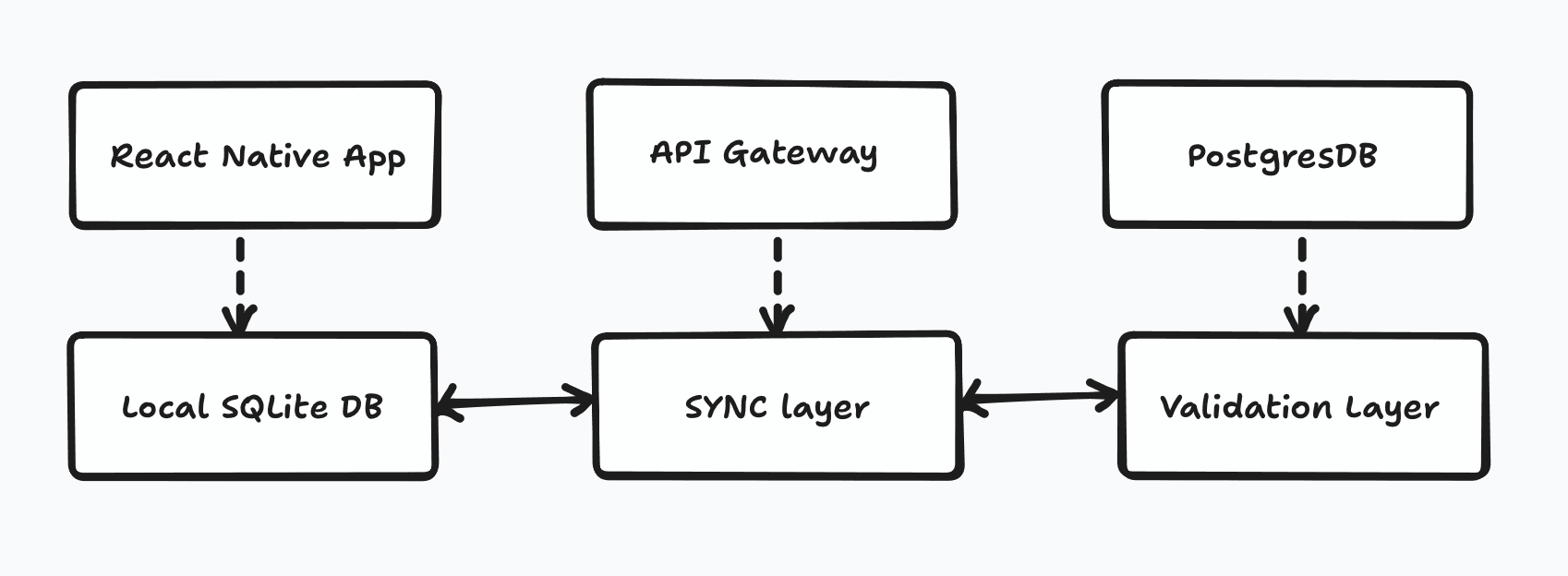
- Local SQLite database for offline data storage
- Intelligent sync mechanism that prioritizes critical data
- Conflict resolution algorithms for handling concurrent edits
- Compression algorithms to minimize data transfer in low-bandwidth scenarios
Lakehouse Architecture Implementation
The data processing pipeline implements a medallion architecture pattern:
- Data Validation Rules: Over 50 business-specific validation rules ensure data quality
- Automated Cleansing: Standardization of field names, units, and values
- Historical Tracking: Temporal data management for trend analysis
- Nightly Processing: Automated ETL jobs run during off-hours to ensure fresh reporting data
Results and Benefits
The implementation delivered significant, measurable benefits to Xclusive Cuttings Uganda:
- Enhanced Decision Making: Management now has access to real-time production metrics
- Improved Quality Control: Faster identification of quality issues in the growing process
- Better Resource Allocation: Data-driven decisions on staffing and resource deployment
- Competitive Advantage: Faster response to market demands and production challenges
- Employee Satisfaction: Field workers report higher satisfaction with digital tools vs. paper forms
Conclusion
This project demonstrates how thoughtfully applied technology can transform manual processes in agricultural settings, even with connectivity challenges. By implementing an offline-first mobile application connected to a robust data processing pipeline and modern analytics platform, we enabled Xclusive Cuttings Uganda to leverage their data as a strategic asset.
The solution not only solved immediate operational challenges but also positioned the client for future growth by creating a scalable data foundation that can accommodate increasing complexity and volume as their business expands.